
In short: Dead stock is items that sit on the shelf for months without selling, tying up cash and space better used for goods that move.
The full guide: Shop inventory management
Work it out now: Stock days
Dead stock is any item that has not sold for a long time, or sells far too slowly for the quantity you hold. There is no single cut-off, because it differs between vegetables, clothes and electronics. A practical rule: if an item has gone longer than its normal selling cycle without a sale, it is dead stock. Its value = quantity × cost price, and that is money doing nothing.
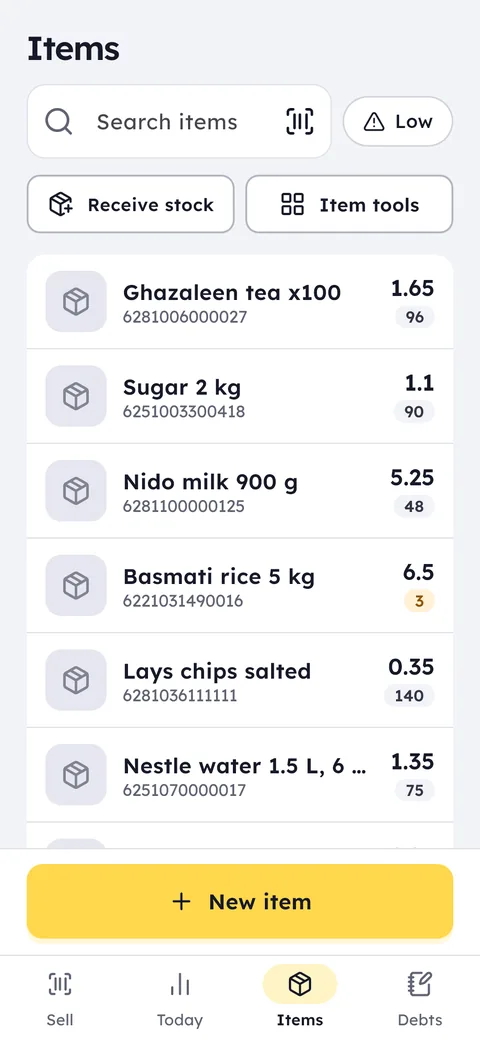
In a clothing shop it is last season's pieces still on the rails. In a phone shop it is accessories for old models. In a grocery it is the product you tried once that nobody asked for again. Ghalleh's weekly and monthly reports list the slow movers that did not sell in the period, with their value at cost, so you know what needs a promotion or a better spot on the shelf before the problem builds up for months.
How to clear dead stock
| Method | When it fits |
|---|---|
| Early markdown | Anything with an expiry date or a fashion cycle; an early markdown costs less than a late one |
| Bundle with a popular item | A slow item that goes with a fast one, like a case with a phone |
| Move to another branch | An item that sells at your second shop but not here |
| Return to the supplier | When your agreement allows it |
Do not wait until dead stock loses its value. Most of all, learn from it and order less of that kind of item next time.
A shop example
A clothing shop in Irbid has 25 jackets that cost JOD 14 each and have not moved in 90 days, which is JOD 350 stuck on the rail. The owner cuts the price from 22 to 16 JOD. If all of them sell, the shop takes JOD 400, covering the cost with JOD 50 profit instead of waiting a season.
Common questions
When does an item count as dead stock?
When it goes longer than its normal selling time without a sale. For food that may be two weeks, for clothes a whole season. Track the last sale date of each item.
Is a discount the only way out?
No. You can move the item somewhere more visible, bundle it with a popular product, transfer it to a branch where it sells, or return it to the supplier if your agreement allows.