
In short: Expiry date tracking means recording when each batch of stock expires, so the soonest-expiring stock sells first and nothing goes out of date unnoticed.
The full guide: Shop inventory management
Expiry tracking means knowing when each batch of your stock expires, not just each product. The same tub of yogurt can come in two batches, one expiring next week and one next month. The rule is first expired, first out: whatever expires soonest sells first. It matters most in supermarkets, groceries, bakeries and dairy shops, because expired stock is a total loss and cannot legally be sold.
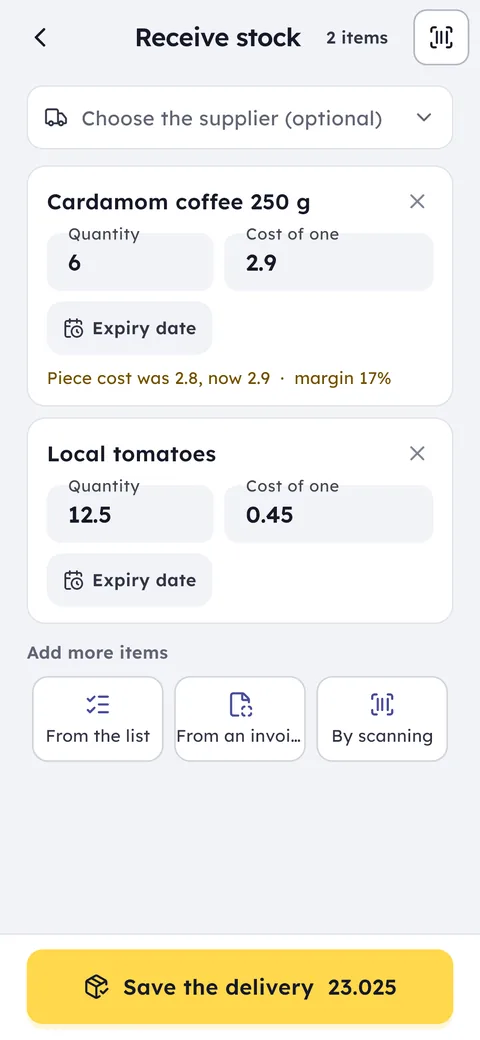
In a supermarket or grocery in Jordan, deliveries arrive roughly every week with different dates. If a staff member puts the new batch in front of the old one, the old one expires at the back. In Ghalleh the app asks for the expiry date first when you receive goods, with the lot number optional; whatever expires within a month shows on the Today screen and in stock in numbers, and the item carries a warning at the sale when its oldest batch is close to expiry.
First expired or first in?
| Rule | Short name | What it means |
|---|---|---|
| First expired, first out | FEFO | The batch closest to expiry leaves first, even if it arrived later |
| First in, first out | FIFO | The batch that arrived first leaves first |
Food and cosmetics follow the first rule, because a newer batch can sometimes expire before an older one.
How to keep expired stock off the shelf
- Keep the shelf in order: soonest expiry at the front, always.
- Do not wait for the last day to discount, because customers rarely buy something that expires tomorrow.
- Agree with suppliers on returning near-expiry stock where possible.
- Look at order quantities for items that keep expiring, because the problem is usually how much you buy.
A shop example
A supermarket in Salt has 20 tubs of yogurt expiring in 5 days. Each costs JOD 0.900 and sells for JOD 1.200. A 25% discount brings the price to JOD 0.900, so if all 20 sell, the shop recovers JOD 18, its full cost, instead of throwing it away.
Common questions
What does first expired, first out mean?
Selling the batch closest to expiry before the others, even if it arrived later. It differs from first in, first out, because a newer batch can sometimes expire sooner.
Do I need expiry tracking for every item?
No. Focus on short shelf-life or high-value items: dairy, chilled meat, baked goods, cosmetics and canned food. Tools and clothes do not need it.