
In short: Gross profit is sales minus the cost of the goods you sold, before shop expenses such as rent and salaries.
The full guide: Pricing your products
Work it out now: Profit margin
Gross profit is what remains from sales after taking away only the cost of the goods you sold. Formula: gross profit = sales - cost of goods sold. Gross margin = gross profit ÷ sales × 100. The key is to use the cost of what you sold, not the cost of everything you bought, because the goods still on the shelf have not entered the calculation yet.
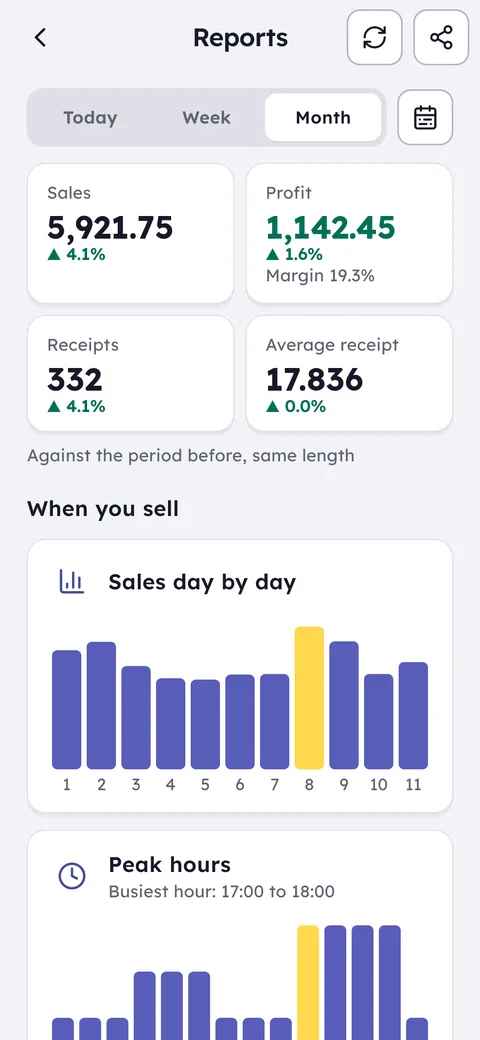
In a bakery or grocery in Jordan, gross profit shifts from day to day depending on which items sold. A day with big sales of a thin-margin item can earn less than a quieter day. Ghalleh shows profit as sales minus cost for each day and each item, so you can tell a busy day from a profitable one.
Gross profit vs net profit
| Gross profit | Net profit | |
|---|---|---|
| Formula | Sales - cost of goods sold | Gross profit - expenses |
| Takes away | The cost of what you sold only | Cost, rent, salaries, electricity and every other expense |
| Measures | How well your prices and items earn | What you actually keep |
| Bakery example | 620 - 372 = JOD 248 | JOD 248 minus that day's expenses |
Keep your costs accurate: if you do not update cost prices after suppliers raise theirs, gross profit will look bigger than it really is. Record damaged goods, giveaways and discounts, since all of them change the figure. And remember gross profit is not what you take home.
A shop example
A bakery in Amman sells JOD 620 in one day, and the ingredients for the items sold cost JOD 372. Gross profit = 620 - 372 = JOD 248, and gross margin = 248 ÷ 620 = 40% of that day's sales.
Common questions
What is gross profit in Arabic?
الربح الإجمالي, also called مجمل الربح. Both mean sales minus the cost of goods sold.
What is the difference between gross and net profit?
Gross profit takes away only the cost of goods. Net profit then takes away every other expense: rent, salaries, electricity and fees. So net profit is the smaller figure.
Why only the cost of goods sold?
Because stock you bought but have not sold is still inventory with value. If you subtracted every purchase, profit would look low on buying days and high on the rest.