

Bakery POS: from the oven to the last tray
A fast counter starts with how you lay out items
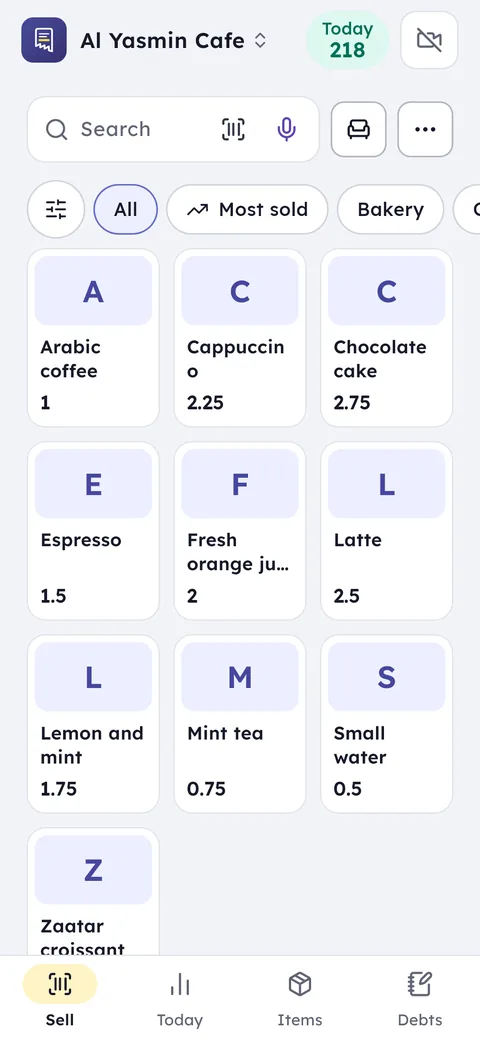
Counter speed in a bakery comes from the menu as much as the cashier. Group items in Ghalleh the way they sit on the shelves: bread, ka'ak and pastries, Arabic sweets, cakes, drinks. Give every item a photo, and the cashier taps the picture of the ka'ak instead of searching for its name.
Put a barcode on packaged goods, bags of rusks, bagged ka'ak, boxes of biscuits, and scan with the phone camera or a scanner. On the Windows PC version, keyboard shortcuts shave seconds off each bill, and in the morning queue those seconds add up to minutes.
Wedding and Eid orders with a deposit
Kunafa trays for a wedding, maamoul before Eid, a birthday cake: orders booked days ahead with part paid upfront. In a bakery POS like Ghalleh you issue the full invoice, the customer pays the deposit in cash, by card or CliQ, and the rest goes on their profile with the pickup date. Each order gets a number and a ready day and hour, and the customer leaves with a printed claim slip to bring on the day.
Before the day you send a WhatsApp reminder with the balance due. On pickup you log the final payment and the balance closes, with no slip pinned to the wall by the oven.
Bread for grocers and nearby shops, on account
Many bakeries supply bread daily to nearby grocers, cafés and shops, paid at the end of the week or month. Open a customer profile for each shop, record every day's delivery as an invoice on their account, and log part payments as they come in.
- A statement for each shop on WhatsApp, with dates and amounts
- The total unpaid across all shops in a single number
- A due date on each account, and a reminder when it's late
Flour, ghee and sugar: what you buy and what you owe
Add what you buy, sacks of flour, tins of ghee, sugar, pistachios, as stock items. When a delivery arrives you enter the purchase invoice, the quantity goes up, the cost updates, and the amount is recorded against the supplier if you haven't paid yet.
Then link the ingredients to what you sell as a recipe on the item: how much flour, ghee and sugar go into a tray of kunafa or a kilo of maamoul. Every sale takes them out of stock, and when flour or ghee nears the level you set you get an alert and order before the mixer stops. You also see what each item costs to make, and the profit on a kilo after the latest rise in the price of ghee.
Ramadan and Eid: days like no others
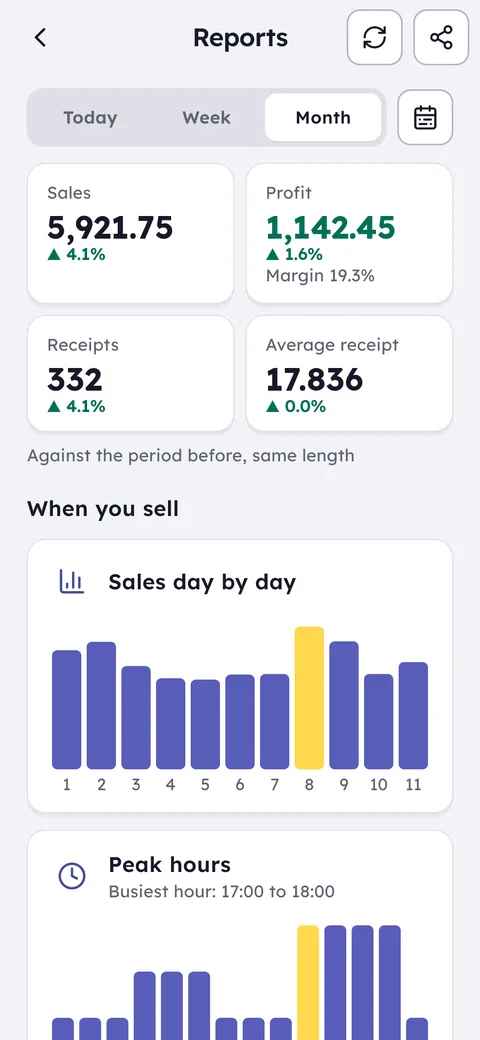
In Ramadan the peak hour moves from morning to just before iftar, and qatayef becomes the item of the day. Ghalleh shows the new peak hours from the first week, so you put a second cashier on at the right time, and each cashier signs in to their own account so you see who sold what.
Set a higher daily target for the season, follow the progress from your phone, and get a celebration alert when you hit it or set the bakery's best day. Compare today with yesterday, then this Eid with the last one.
In a busy sweet shop, the receipt lists each item with its quantity and price, then the total, so customers can check it at a glance and the Eid queue has fewer mistakes.
Pre-dawn bakers and your branches
A bakery starts hours before dawn. Bakers clock in from their phones only while inside the bakery, counter staff clock in when their shift starts, and you see who's working from home. The shift schedule spreads people across oven hours and selling hours.
Advances workers take during the month are recorded against each name, and hours are ready for payroll. No more month-end arguments over a note somebody scribbled.
If one main oven bakes for two or three shops, record production at the main branch, then move quantities to each shop with a stock transfer. Every branch knows what it received, and you see what sold and what's left in each one, plus all branches together.
Open a new branch yourself from the app, with its staff and devices, without starting from scratch.
Shelf life and what's left at closing
Packaged cakes and boxed sweets have expiry dates. Record them on each item and see what's close to expiring, so you move it to the front or discount it before it goes in the bin.
When you decide to sell the evening's leftover sweets at a discount, choose which staff have the right to discount. Every big discount reaches you as an alert with the employee's name and is saved in the activity log. What doesn't sell, log as waste with its reason, and it shows in the reports at cost.
Bakery accounts: what you sold, what you bought, what you kept
A bakery's accounts usually live in three places: the flour notebook, the notebook of shops that owe you, and the production sheet. In Ghalleh they sit together: counter sales, purchase invoices from the mill and the ghee supplier, what each shop taking bread on account owes you, and expenses such as gas and electricity.
At the end of the day you see sales and profit after cost, and at the end of the month you hand the accountant a PDF with sales, purchases and a tax estimate, instead of three notebooks to add up.
- Profit on each item from its price and the cost of its ingredients
- What you owe each supplier, and what each shop owes you
- Daily expenses in their place, so you see net profit, not just sales