

Perfume shop POS: oils, blends and boxed bottles
Oils by the millilitre, bottles by the piece
A perfume shop in Jordan sells two kinds of stock at once: boxed fragrances with barcodes, and perfume oils filled in front of the customer. In Ghalleh every item gets its own selling unit: the boxed bottle by the piece, the oil by the millilitre or the tola, and the bill works out the price from the quantity.
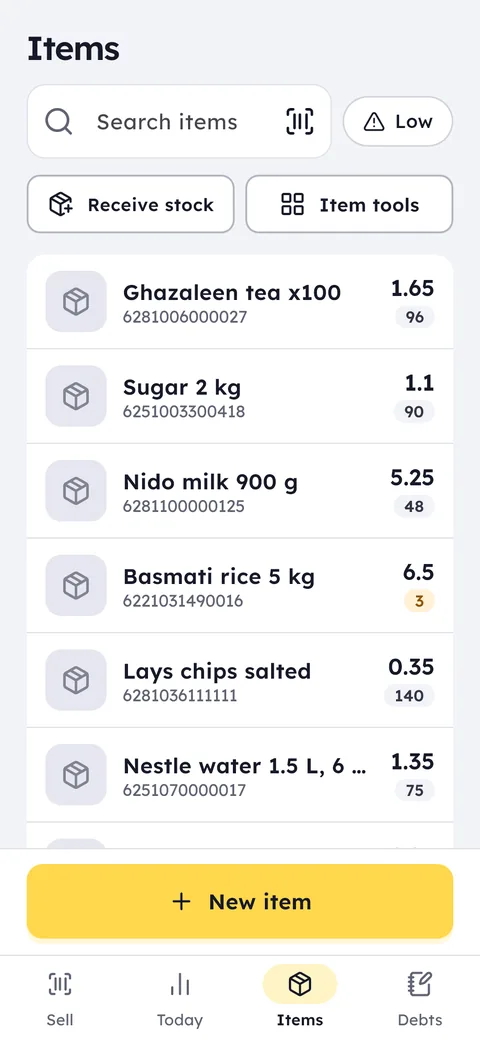
Empty bottles in each size are a stock item too, so you know how many 12 ml bottles are left before a customer asks for a fill and there's nothing to fill.
Oil prices vary a lot from one type to the next, so give each oil its cost in the same unit you sell it by. Every fill then shows its own profit, and you know which oils earn their place on the front shelf and which tie up money at the back.
The blend on the bill, line by line
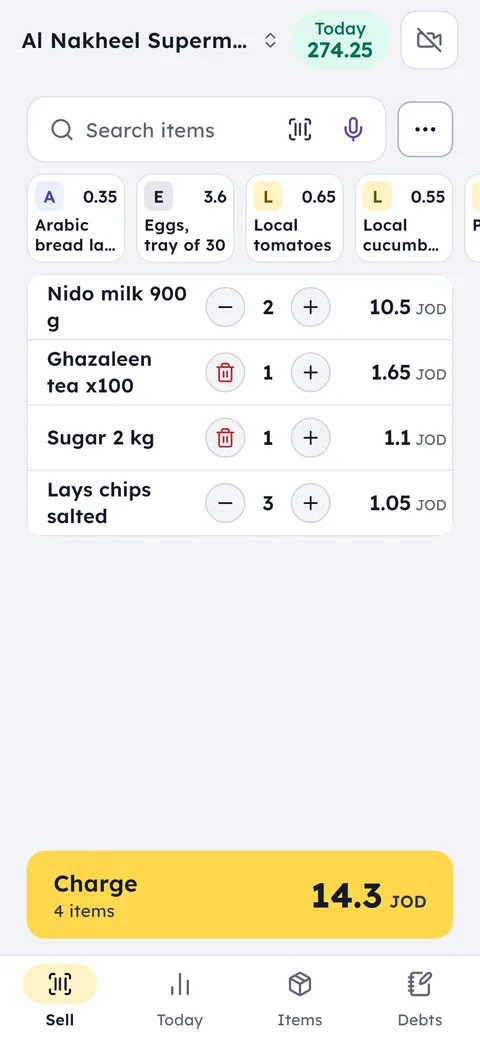
When a customer asks for a custom blend, ring it up as it is: an amount of oud oil, an amount of musk, a bottle, wrapping. Each line comes off its own stock and counts in profit at its own cost, so you never sell an expensive blend at a guessed price that loses money.
When they come back a month later wanting the same again, open their profile and look at past purchases, and the blend is there with the exact amounts you sold the first time.
Because a blend's price comes from its amounts, the receipt shows each line with its price and then the total, so the customer sees how the price was worked out. You can send it on WhatsApp too.
Gift seasons: Ramadan, Eid and Mother's Day
A perfume shop's biggest days come in known seasons. Before each one, look at last season's best sellers and the days of stock left, and order from your supplier by the numbers. Add gift sets as items with their prices and wrapping as its own item, so each shows on the bill.
- A higher daily target for the season, and a celebration alert when you hit it
- The shop's best day on record, to beat next year
- The gift receipt reaches the buyer on WhatsApp instead of getting lost in the bag
From supplier to shelf: cost and stocktake
Boxed fragrances come from agents, oils from suppliers, and every shipment has its own price. Enter the purchase invoice when stock arrives, the quantity goes up, the cost updates, and the amount is recorded against the supplier if you pay later. At any time you see what you owe each supplier and log your payments.
If the agent sends their product list as an Excel file, import it once with names, barcodes, costs and prices, instead of typing in hundreds of boxes one by one.
One bottle can be worth a whole day's sales, so a gap between the system and the shelf is not a detail. Make stocktake a monthly habit: staff scan every box with the phone camera, and you see the differences item by item.
Cosmetics and creams have expiry dates. Record them on each item and sell the nearest-to-expiry first. Stock value at cost is in view any time, so you know how much of your money is sitting on the shelves.
Payments, refunds and account customers
Perfume customers often pay two ways: part cash and part card, or a full CliQ transfer. Split payment on the same invoice and each part lands in its place, so the drawer closes at night on clear numbers.
If someone returns a sealed bottle, the refund is recorded against the original invoice and the bottle goes back into stock. You get an alert for every refund a staff member makes, with their name and the amount, and it stays in the activity log.
Some companies order fragrances as gifts for staff or clients at holidays and pay in instalments. Open a customer profile for each company, put the invoice on their account with a due date, and send the statement on WhatsApp as the date gets close. The total unpaid across all customers sits in one number.
A mall kiosk and a shop in the souq
Many perfume sellers run a mall kiosk and a shop in an old market. Add each location as a branch, and move stock between them with a transfer when a customer wants a scent that sold out in one. You see each branch's sales and all of them together from your phone.
Staff clock in from their phones only while inside their branch, and you see sales per employee if you pay commission. The shift schedule covers the mall's long hours without leaving the kiosk unstaffed.